
The Iconographic Revolution: When Personal Divine Guides Became Visible
The Iconographic Revolution: When Personal Divine Guides Became Visible
In the 2nd and 3rd centuries CE, something remarkable happened in the Buddhist artistic centers of Gandhara and Srinagar. Religious artists began creating imagery that would fundamentally challenge the power structures of organized religion. They started depicting personal spiritual guides - what Wayists call Divine Taras - as individualized buddha figures without the standardized iconographic markers that identified other celestial beings.
This wasn’t just an artistic innovation. It was a spiritual revolution that paralleled what Lord Jesus had taught a century earlier: that every person could have direct access to heaven without needing priests, temples, or institutional intermediaries.
Understanding Buddhas: More Than One Path to Wisdom
Before we explore this revolution, we need to clarify something that often confuses people today. When we hear “Buddha,” many immediately think of a single figure - Siddhārtha Gautama, the historical Buddha. But the term “buddha” (from Sanskrit, meaning “awakened one” or “enlightened one”) actually refers to any being who has achieved complete spiritual awakening.
There are millions of buddhas throughout the cosmos. Each represents a perfected spiritual being who has graduated from what Wayists call Butterfly Path - the journey from material existence to immortal spiritual existence. Different buddhas serve different functions in the spiritual realms.
Major Recognized Buddhas Include:
- Siddhārtha Gautama Buddha - The historical teacher, depicted with earth-touching mudra, or teaching mudra.
- Amitābha Buddha - The Father aspect in heaven, shown with Amitabha Mudra (hands touching at knuckles), simple dress (simplicity), sometimes with begging bowl (signifying humbleness).
- Avalokiteśvara Buddha (technically a bodhisattva in some traditions, a buddha in others) - The Buddha of Compassion, always shown with Amitābha in his crown, often with lotus, water-moon pose, protection or teaching mudra. the deity who incarnates to help human societies. Who incarnated as Jesus of Nazareth, for example.
- PandaraJanani Buddha - The Mother aspect in heaven, embodiment of perfect wisdom.
- Prajñāpāramitā Buddha - The yin energy equal of Avalokiteśvara.
Ancient Buddhist artists developed iconographic rules to distinguish these different buddhas. Just as Christian art developed halos and specific attributes for different saints, Buddhist art used mudras (hand gestures), postures, objects held, and crown decorations to identify specific celestial beings.
This system served an important purpose: it helped practitioners recognize and connect with the right celestial guide for their needs. If you needed protection, you’d recognize Avalokiteśvara by his distinctive markers. If you sought wisdom for governance, you’d identify Amitābha.
But what about your personal guide? The one assigned specifically to you?
The Birth of Personal Guide Imagery
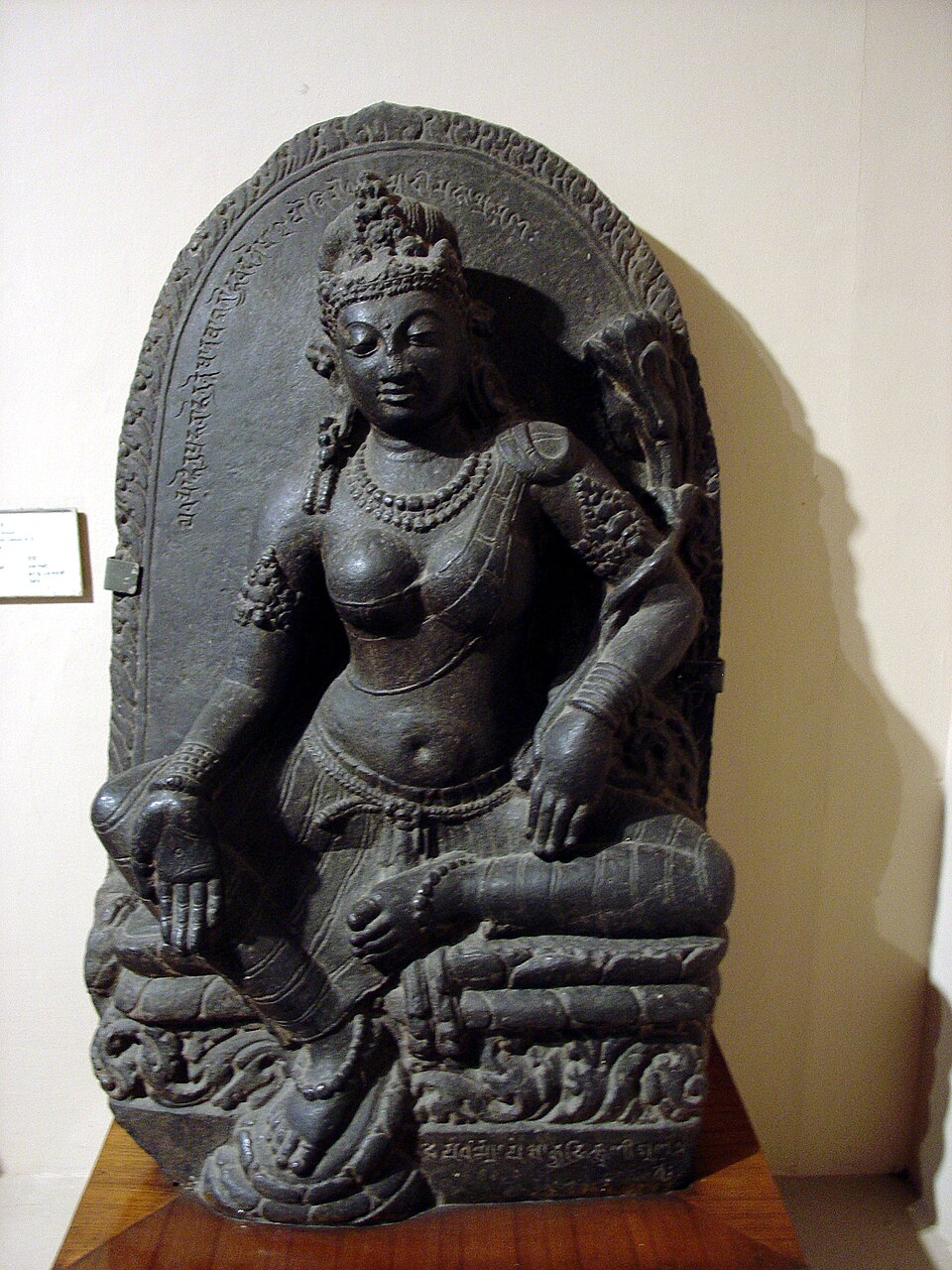
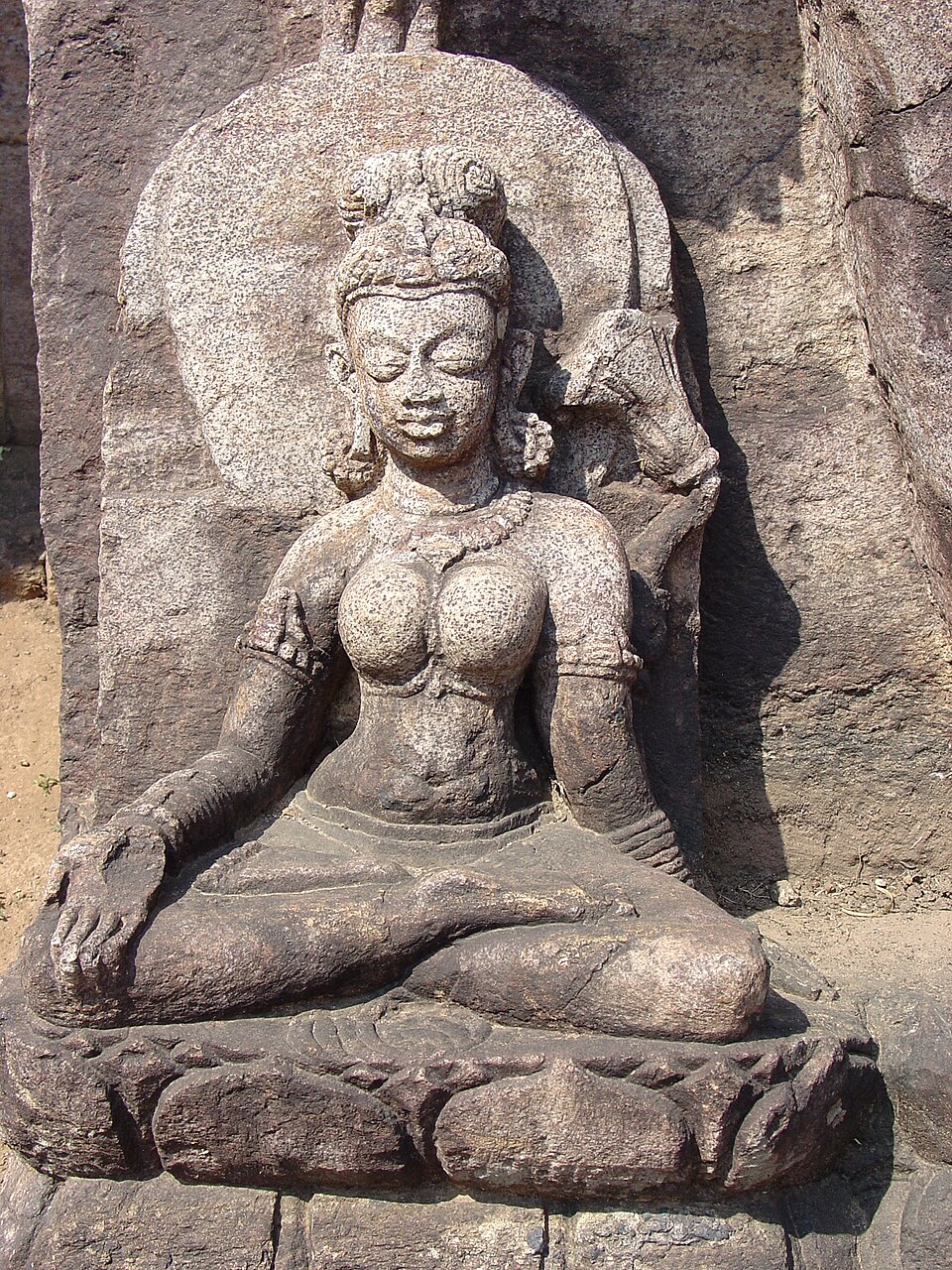
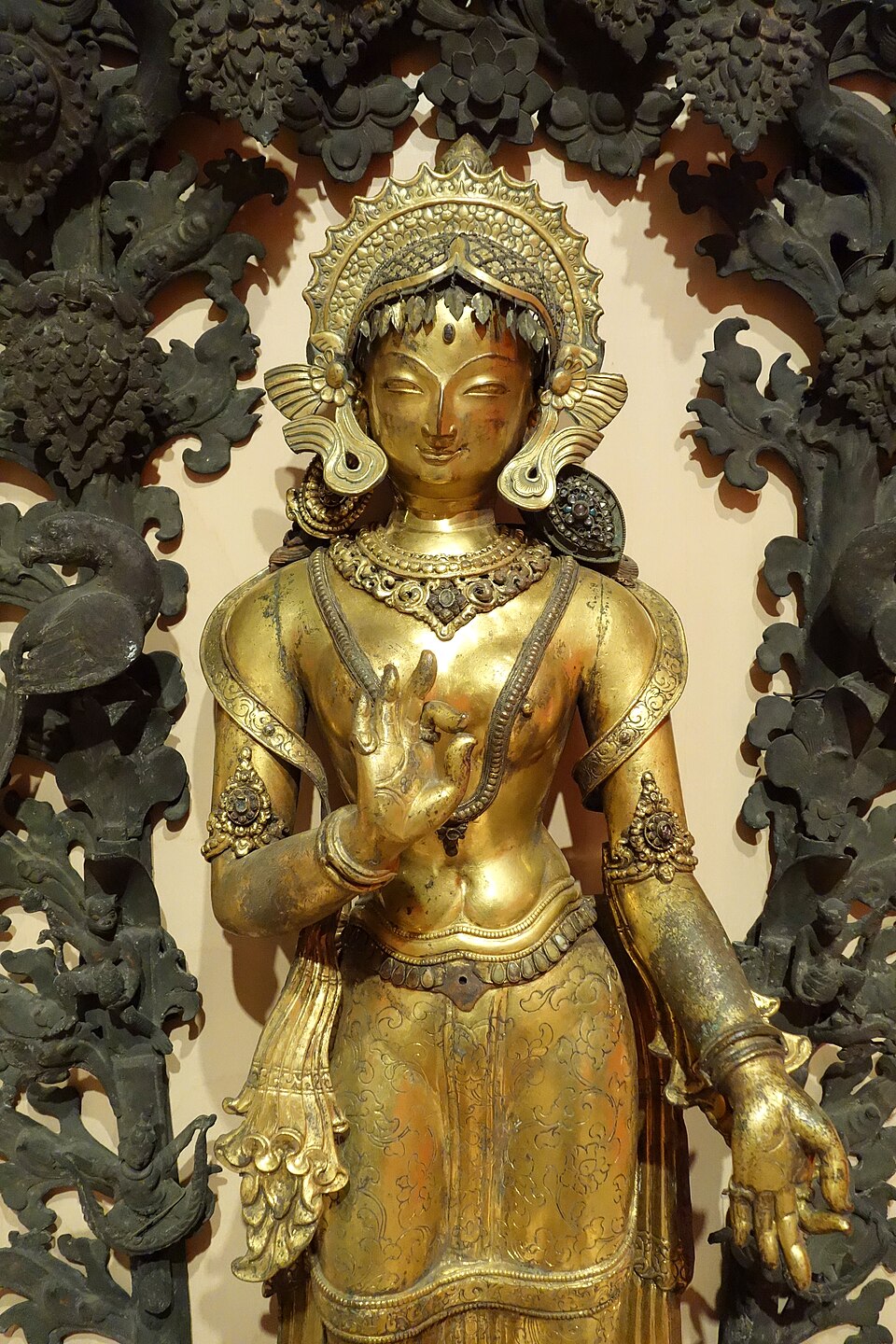
Around the 2nd to 3rd centuries CE in Gandhara (present-day northern Pakistan and eastern Afghanistan) and Srinagar (Kashmir), Buddhist artists began depicting a different kind of spiritual being. These figures were clearly buddhas - enlightened beings - but they lacked the specific iconographic identifiers of the major recognized buddhas.
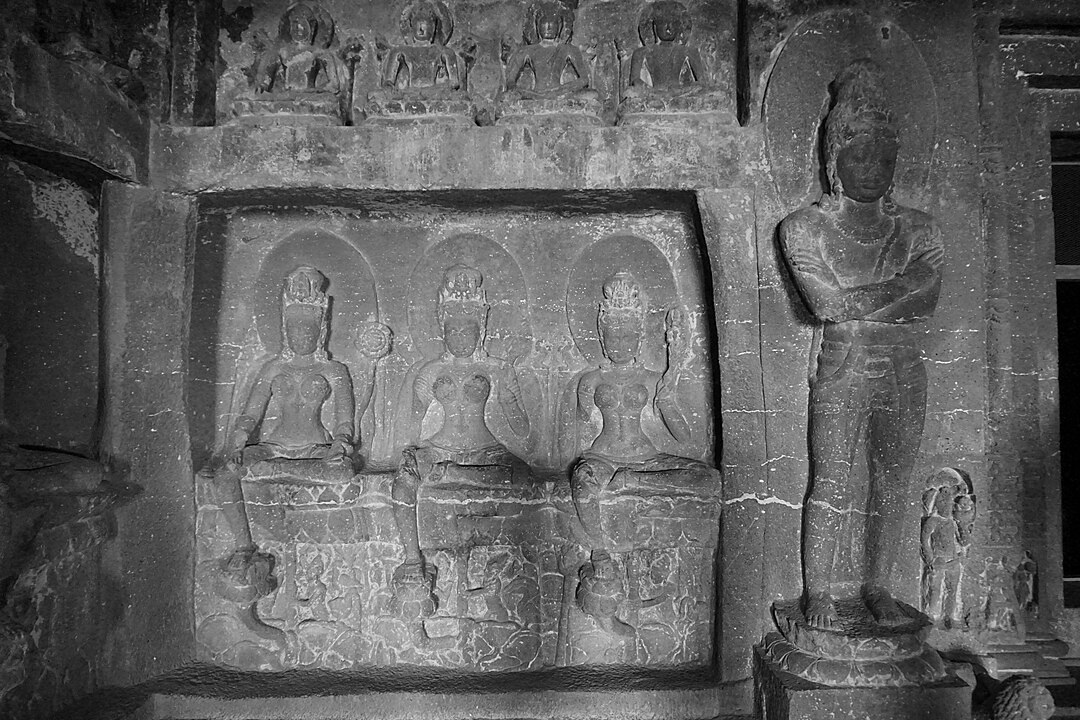
Distinctive Features of These Images:
- Leaner, more varied facial features that could appear genderless or take on either masculine or feminine qualities
- Prominent breasts symbolizing nourishment through divine nectar (amrita) for those on the spiritual path
- Hourglass figures emphasizing the nurturing role
- Simple postures without the dramatic mudras of other buddhas
- Often holding or seated upon lotus flowers, indicating membership in the Lotus Family of spiritual beings
- No fixed iconography - each image could be unique
What made these images revolutionary was their very lack of standardization. While Avalokiteśvara always had Amitābha in his crown and specific mudras, these personal guide figures could appear differently to different practitioners. The art reflected a profound theological truth: each person’s Divine Tara (the term that would later become standard) manifests in the form most helpful for that individual’s spiritual development.
This artistic choice embodied a radical teaching: your connection to heaven is personal, direct, and unique. You don’t need to approach one of the major celestial figures the same way everyone else does. Your own Divine Guide has been with you since birth, knows you intimately, and appears to you in whatever form your consciousness can most readily embrace.
Historical Context: An Ancient Concept Becomes Visible
The concept of personal divine guides was not new in the 2nd-3rd centuries. According to Hindu traditions, Tārā (meaning “one who helps cross over”) existed as a mahāvidyā (great wisdom deity) as early as 600 BCE. Buddhist sources suggest that even Siddhārtha Gautama’s mother was considered a Tārā.
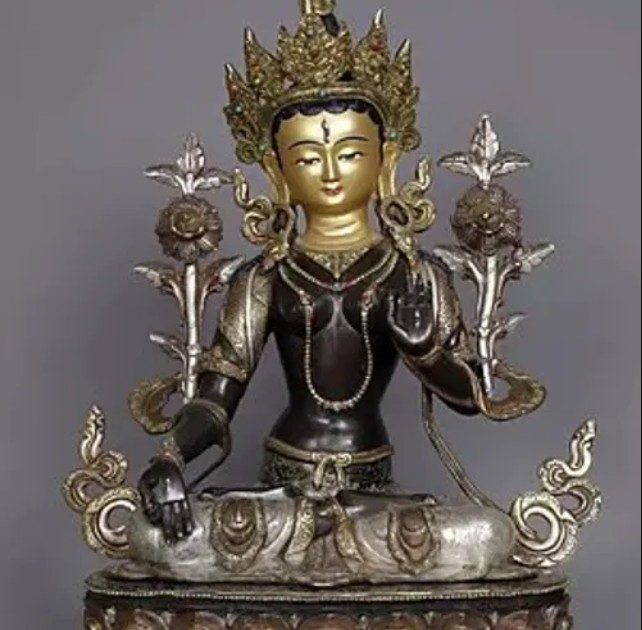
The name itself is deeply meaningful. In Sanskrit, Tārā derives from the root √tṝ, meaning “to cross.” It carries the causative sense: “to cause to cross” or “to rescue.” A Tārā is literally “one who helps you cross from this shore of material existence to the far shore of spiritual awakening.”
Wayist understanding explains why Tārā is called “mother of all buddhas.” Since every person has their own Tārā guiding them on Butterfly Path, and since everyone who achieves buddhahood does so with their Tārā’s help, it follows that all buddhas are born through the assistance of these divine guides.
What changed in the 2nd-3rd centuries wasn’t the concept but its visual representation. For the first time, artists were creating images that ordinary practitioners could use in their personal devotional practice. These weren’t temple icons requiring priestly interpretation. They were tools for direct personal connection.
The Revolutionary Implications
The creation of personal Divine Guide imagery represented a profound challenge to religious authority structures. Consider what this meant in practice:
Before This Innovation:
- Spiritual power was concentrated in monasteries and temples
- Only ordained monks could properly meditate on celestial beings
- Laypeople depended on monastic communities for spiritual guidance
- Access to divine wisdom required institutional intermediaries
- Proper spiritual practice meant following prescribed rituals in designated sacred spaces
After Personal Guide Imagery Became Available:
- Any person could have a Tārā image in their home
- Private meditation and devotion became possible for everyone
- Direct relationship with one’s Divine Guide needed no priestly mediation
- Spiritual practice could happen anywhere, anytime
- Heaven became accessible without institutional permission
This wasn’t just spiritually significant - it was politically explosive. Religious institutions in the ancient world maintained power by positioning themselves as necessary intermediaries between humans and the divine. Priests controlled access to sacred knowledge. Temples monopolized sacred space. Rituals required expert guidance.
The personal Divine Guide images bypassed this entire power structure.
A poor farmer in a remote village could now have his own shrine. A woman barred from monastery education could develop her own meditation practice. A merchant traveling far from religious centers could maintain spiritual connection. No one needed permission. No one required institutional validation.
The revolution in religious art reflected a revolution in religious access.
The Parallel Teaching of Lord Jesus
This Gandharan innovation occurred roughly 100-200 years after Lord Jesus walked the earth teaching an identical principle: direct access to heaven for all people, regardless of religious credentials or institutional affiliation.
Lord Jesus faced execution precisely because he challenged the temple’s monopoly on divine access. He taught that:
- Every home could become a sacred space
- Every heart could connect directly with heaven
- Every person could access divine wisdom
- Every soul could walk the spiritual path without priestly permission
As we read in the Wayist understanding of his revolutionary message:
“This was Lord Jesus’ revolutionary gift to humanity - not a new religion, but the shattering of religious barriers between humans and heaven. Before him: Only monks could meditate, only priests could pray effectively, only temples held sacred power, only the educated could access wisdom. With his teaching: Every home became a potential shrine, every heart could connect directly with heaven, every person could access divine wisdom, every soul could walk the path.”
Religious authorities saw Jesus as a dire threat because he was dismantling their system of spiritual control. By showing that divine connection requires no religious permission, he freed humanity from religious bondage over spiritual development.
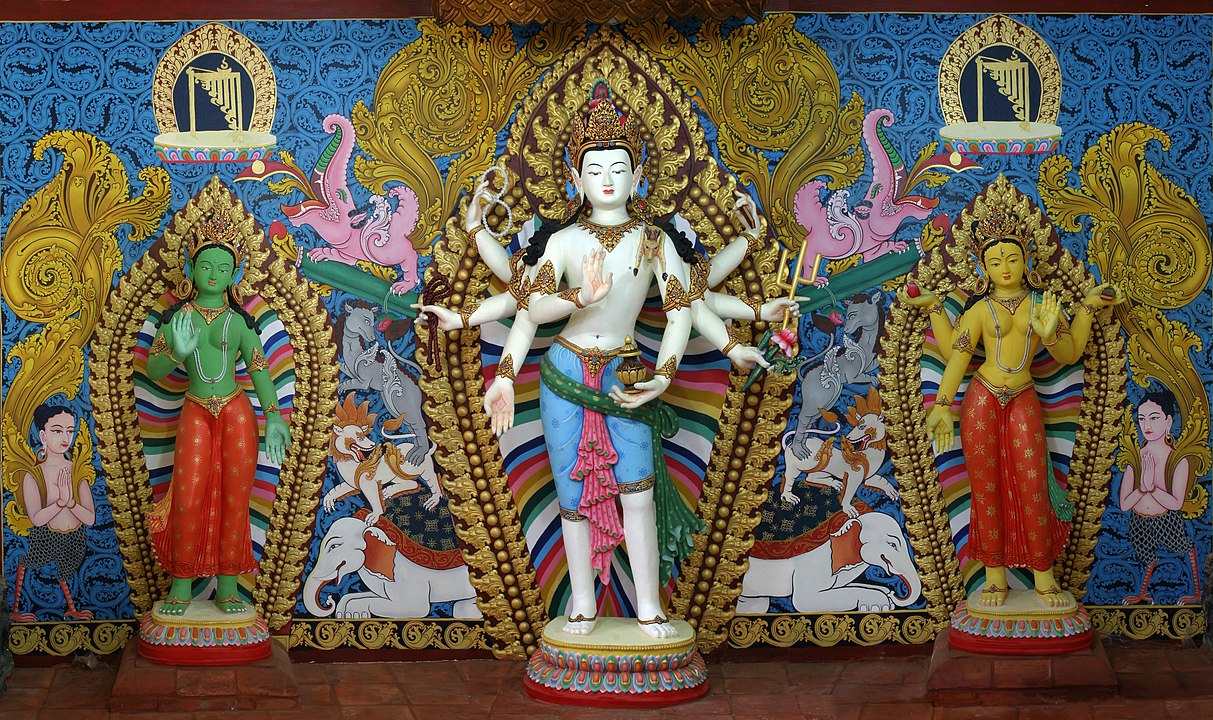
The artists of Gandhara and Srinagar, a century or two later, were doing exactly the same thing in visual form. They were creating the tools for direct divine connection, making the invisible visible, giving people the means to bypass institutional control over their spiritual lives.
Both movements faced resistance. Both persisted because they addressed a fundamental human need: genuine, unmediated connection with the divine.
The Nature of the Relationship: Worship or Devotion?
When contemporary people see Wayist practitioners with Tārā images on their altars, touching symbols on their mala beads, or bowing before shrine images, a natural question arises: “Isn’t this idol worship?”
The answer requires understanding what worship means - and what it doesn’t mean - across different religious traditions.
What It Is NOT:
Not Appeasement: Wayist practitioners don’t engage in worship as appeasement. Our Divine Taras have no needs. They require no praise to validate their existence. They don’t change the weather, influence sports teams, or manipulate other people to please us. No amount of prayer or offerings will convince a Tārā to alter external circumstances for our benefit.
This distinguishes Wayist practice sharply from many religious traditions where worship aims to please deity figures who might then grant favors or withhold punishments. In Wayism, prayer changes us, not our Taras.
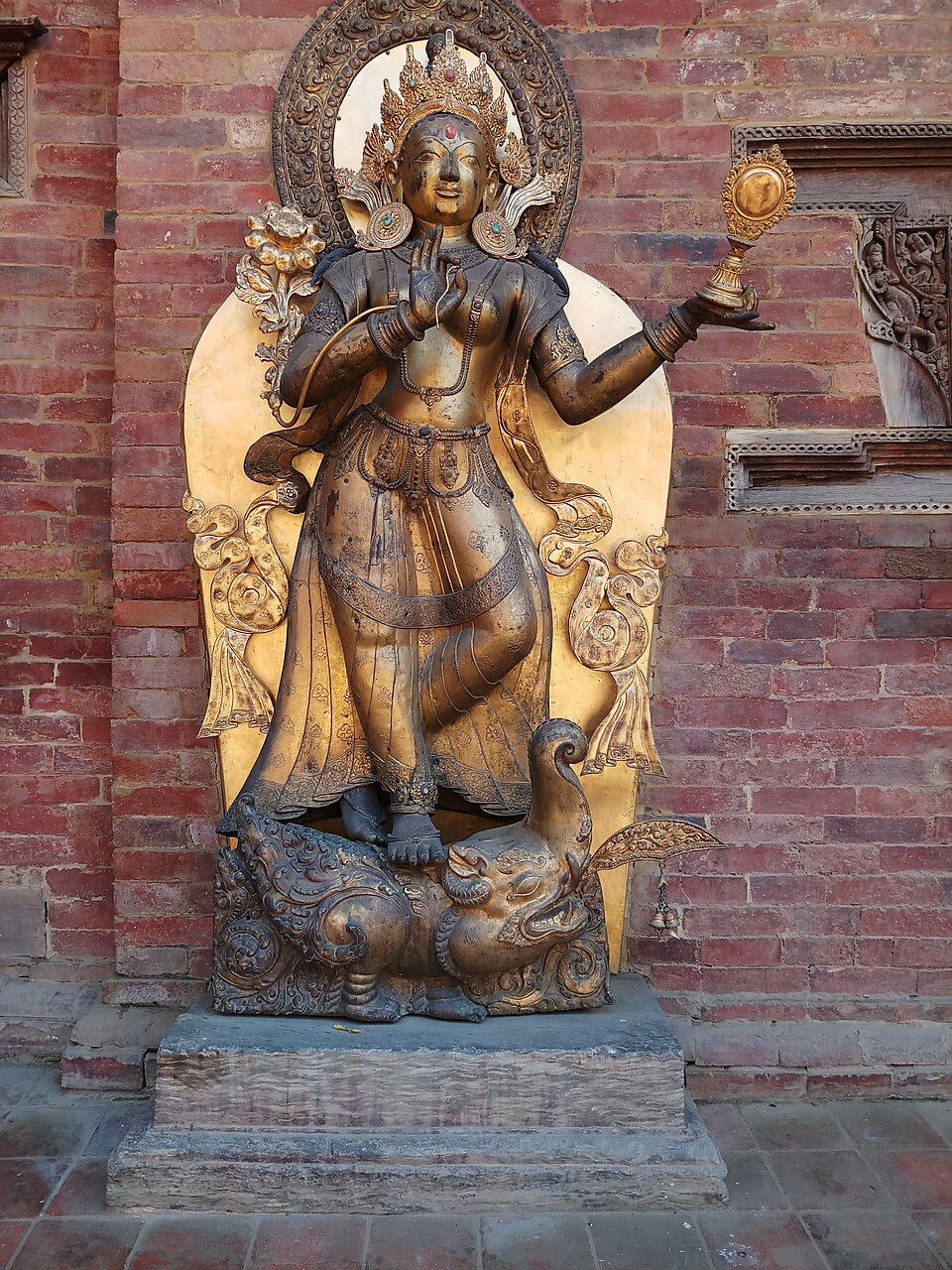
Not Idol Worship in the Biblical Sense: The images are not the beings themselves. Every Wayist practitioner knows perfectly well that Taras are energy beings existing in the spiritual realm. They have no material bodies. No earthly image can depict what they actually “look like” because that question itself makes assumptions about material form that don’t apply to spiritual beings.
The graphic image is the finger pointing at the moon, not the moon itself. It’s a tool to help our brain-mind shift into the higher consciousness state where connection with spiritual energy beings becomes possible.
Not Monotheistic Worship: Wayism is not monotheistic. We don’t believe in an all-powerful deity who created everything and controls all events. We don’t ask Taras to reward us or punish others. We don’t tell them how great they are because they need to hear it. The entire framework of Abrahamic worship simply doesn’t apply.
What It IS:
A Loving Devotional Relationship: The relationship with one’s Divine Tārā is deeply devotional. It’s a loving connection characterized by:
- Profound respect and acknowledgment that our Tārā is superior to us in wisdom, compassion, and spiritual development
- Recognition that our Tārā has been with us since birth, knows us better than we know ourselves
- Gratitude for constant guidance and protection
- A sense of never being alone
- Intimate, quiet communion
The mystic poets throughout history have described this relationship eloquently. It resembles how one might say “I adore my spouse” or “I worship the ground she walks on” - using the language of devoted love, not religious obligation.
Connection Through Loving Energy: The reason this relationship works is energetic. Love is the frequency at which we can connect with our Divine Taras. They exist in the spiritual energy domain, accessed through our heart chakra (Anahata) and throat chakra (Vishuddhi). To make that connection, we must raise our energetic state to one of loving devotion.
This isn’t about pleasing the Tārā. It’s about achieving the energetic resonance necessary for communion. Just as a radio must be tuned to the right frequency to receive a signal, our consciousness must be attuned to loving frequencies to connect with our spiritual guide.
Private, Intimate Spirituality: Mystical devotion to one’s Tārā is typically:
- Quiet rather than ostentatious
- Private rather than publicly performed
- Intimate rather than ritualistic
- Natural rather than obligatory
- Spontaneous rather than scheduled
It’s not about showing others how devout you are. It’s about maintaining a living relationship with the divine being who guides your spiritual evolution.
Yes and No to “Worship”
So is it worship?
Yes - in the sense that:
- We acknowledge our Tārā as vastly superior in all spiritual respects
- We offer love, respect, and devotion
- We use terms of respect and honor (lord, lady, depending on culture and language)
- We maintain regular spiritual communion
- We seek guidance and help
No - in the sense that:
- Our Tārā needs nothing from us
- We’re not trying to appease or manipulate
- We don’t expect external circumstances to change
- We’re not worshiping an idol or false god
- The relationship is reciprocal, not hierarchical submission
Perhaps “devotional relationship with an acknowledged spiritual superior” captures it better than “worship” in the Western religious sense.
The Mystical Tradition Across Cultures
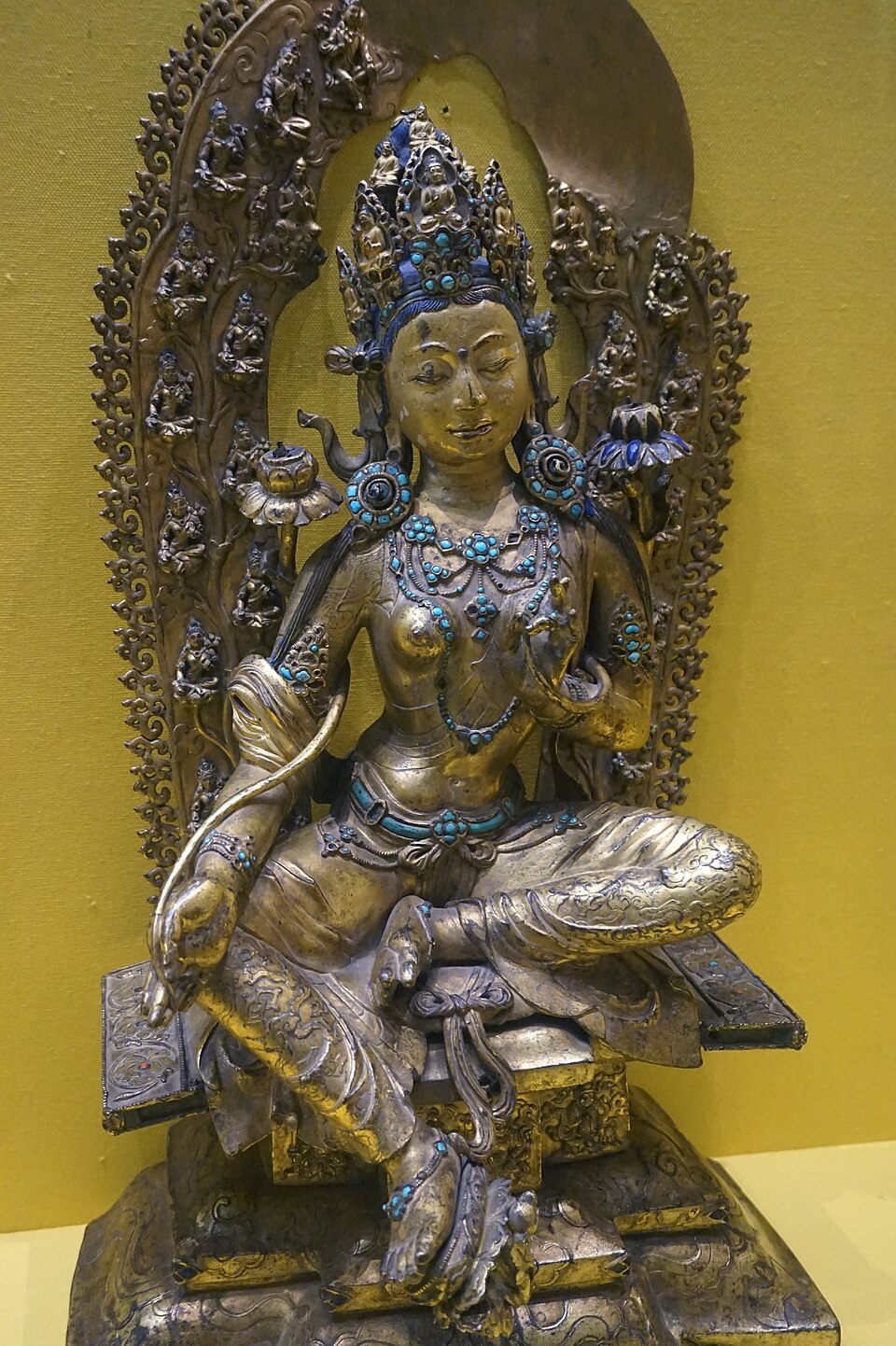
The intimate, loving relationship with divine guides that the Gandharan artists made visible wasn’t unique to Buddhist practitioners. Throughout history, mystics across all religious traditions have described remarkably similar experiences of sacred intimacy with the divine.
Voices from the Islamic World
Rabia of Basra (8th century CE), a freed slave woman who became one of the most celebrated Wayist teachers in Islamic culture, expressed the distinction between fear-based religion and love-based devotion:
“O God! If I worship You for fear of Hell, burn me in Hell, and if I worship You in hope of Paradise, exclude me from Paradise. But if I worship You for Your Own sake, grudge me not Your everlasting Beauty.”
Rabia lived during a time of Islamic expansion and faced pressure to conform to orthodox religious practices. Yet she insisted on what she knew from direct experience - that authentic divine connection transcends both religious promises and threats. Her devotion wasn’t about avoiding punishment or gaining rewards. It was about the intrinsic beauty and rightness of loving communion with the divine.
Jalāl ad-Dīn Muhammad Rūmī (13th century Persia) spoke of this sacred intimacy with stunning directness:
“The minute I heard my first love story I started looking for you, not knowing how blind that was. Lovers don’t finally meet somewhere. They’re in each other all along.”
Rumi understood what Wayists know: the divine guide isn’t distant. The separation is illusory. We seek what is already present, within us, waiting for our consciousness to expand enough to recognize it.
Voices from the Christian Tradition
John of the Cross (16th century Spain), a Catholic mystic, described spiritual union in language that clearly transcends orthodox Christian theology:
“In the inner wine cellar I drank of my Beloved, and, when I went abroad through all this valley I no longer knew anything, and lost the herd that I was following.”
John’s poetry speaks of mystical intoxication, of losing one’s ordinary self in divine communion. His descriptions troubled Church authorities precisely because they suggested direct divine experience beyond Church mediation.
Julian of Norwich (14th century England), writing during the Black Death and facing Church persecution of reformers, dared to express Wayist understanding:
“I it am. The greatness and goodness of the Father, I it am; the wisdom and kindness of the Mother, I it am.”
Julian’s revelation of divine unity - recognizing her own essence as inseparable from divine reality - echoes the same truth that Buddhist practitioners discovered through connection with their Taras. This is the goal: to realize we are becoming like that which we devotedly love.
Voices from the Hindu/Indian Tradition
Akka Mahadevi (12th century Karnataka), a poet-saint who rejected marriage to maintain her devotion to Lord Shiva as her true beloved, captured the all-consuming nature of mystical love:
“Like a silkworm weaving her house with love from her marrow, and dying in her body’s threads winding tight, round and round, I burn desiring what the heart desires.”
Kabir (15th century North India), who bridged Hindu and Muslim communities with his Wayist understanding, recognized the universality of divine presence:
“O servant, where dost thou seek Me? Lo! I am beside thee. I am neither in temple nor in mosque: I am neither in Kaaba nor in Kailash: Neither am I in rites and ceremonies, nor in Yoga and renunciation. If thou art a true seeker, thou shalt at once see Me: thou shalt meet Me in a moment of time.”
Janabai (13th century Maharashtra), a housemaid-turned-mystic, expressed the omnipresence of the divine in daily life:
“What I eat is divine What I drink is divine My bed is also divine The divine is here, and it is there There is nothing empty of divine Jani says — Source has filled everything from the inside out”
The Common Thread
What unites these voices across centuries, cultures, and nominal religious affiliations?
They All Experienced:
- Direct, unmediated divine communion
- Loving intimacy rather than fearful submission
- The divine as immediately present, not distant
- Unity or union transcending subject-object duality
- Freedom from institutional religious control
- A sense that all reality is pervaded by divine presence
They All Risked:
- Persecution by religious authorities
- Accusations of heresy or blasphemy
- Social ostracism for refusing orthodox practices
- Loss of livelihood and security
- Physical danger in some cases
They All Insisted:
- On the primacy of direct experience over doctrine
- On love as the authentic spiritual force
- On the inadequacy of religious institutions to mediate the divine
- On the universal accessibility of divine communion
- On living the truth they experienced, regardless of cost
These mystics weren’t following the same religion. They were experiencing the same reality that the Gandharan artists made visible: each person can have an intimate, loving, guiding relationship with a divine being who helps them cross from this shore to the far shore of spiritual awakening.
This is the ancient wisdom that transcends all religions, predates all institutions, and will outlast all doctrines: the Way is personal, direct, and available to all.
Contemporary Wayist Practice
In modern Wayism, the tradition that those 2nd-3rd century artists helped establish continues and thrives. Today’s practitioners maintain the same direct access to their Divine Taras that was revolutionary two millennia ago.
Symbols and Sacred Objects
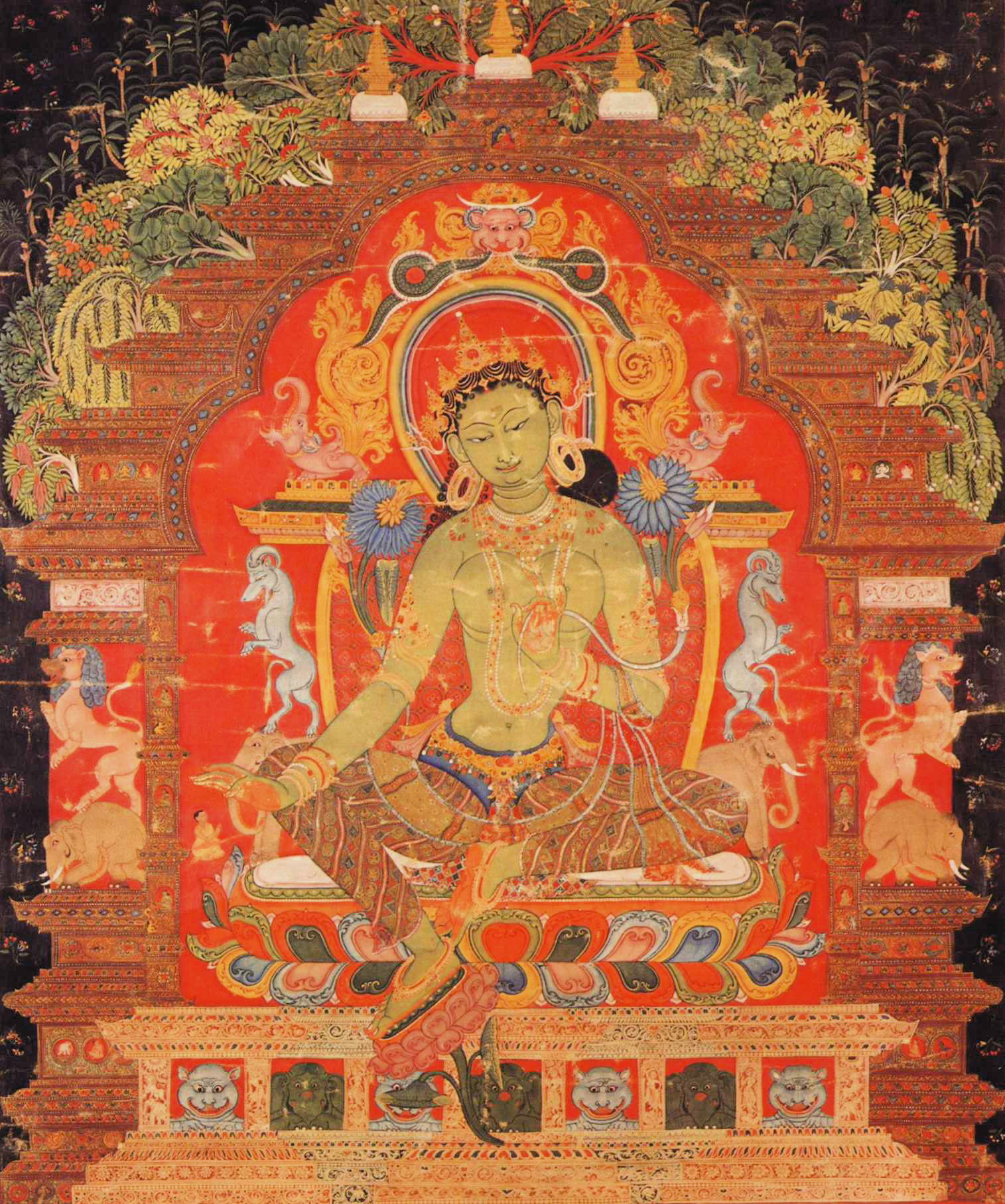
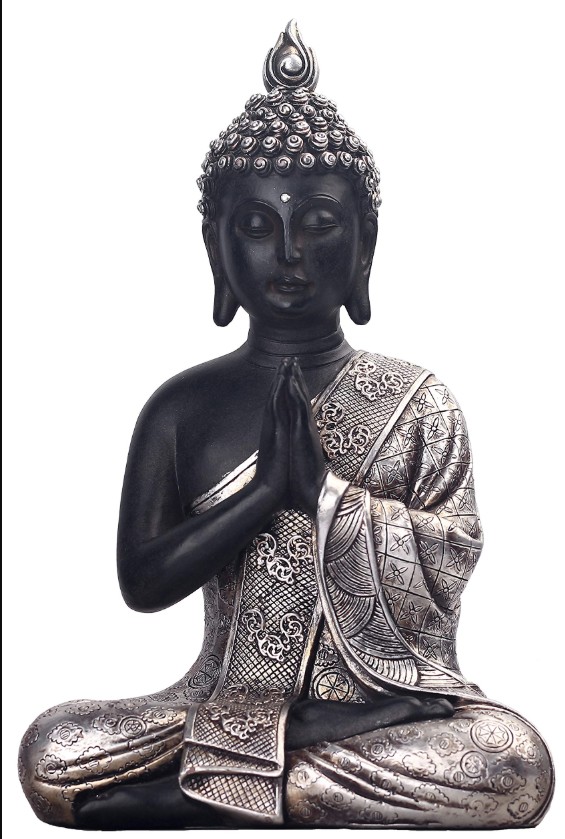
On Wayist Altars: Small Tārā statues or images serve as focal points for meditation and devotion. These aren’t worshiped as objects. Rather, they help the practitioner’s mind attune to the presence of their Divine Guide. Just as a photograph of a loved one helps us feel their presence, the Tārā image helps us shift consciousness toward connection.
On Mala Beads, Bracelets, and Necklaces: Many Wayists wear jewelry incorporating Tārā symbols. A simple touch to the charm or bead serves a practical purpose: it signals to brain-mind that it’s time to release worldly concerns and allow higher-self awareness to come forward. With persistent practice, this becomes almost instantaneous - touch the symbol, shift consciousness, sense the loving presence of one’s guide.



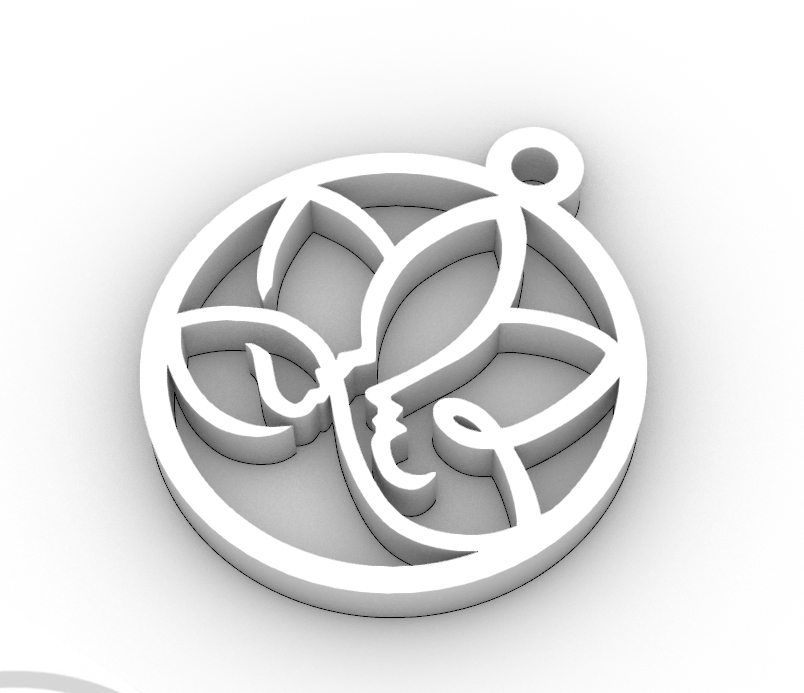
The Wayist Symbol Itself: The central Wayist symbol incorporates multiple levels of meaning:
- The lotus flower, representing spiritual beings growing from material existence toward enlightened purity.
- The flow of universal energies through all things.
- Two face outlines looking at one another in the center, depicting both community (we see each other) and our Tārā seeing us - truly seeing who we are and who we’re becoming.
- All of this showing that Tara, too, is one with the flowing energies, just existing on a higher plane to which she invites us and helps us ascend.
This symbol reminds practitioners that spiritual evolution isn’t solitary. We’re in relationship - with each other in community, and with our Divine Guides who journey with us.
Daily Practice
For the contemporary Wayist, connection with one’s Tārā isn’t a Sunday-only or formal-occasion-only practice. It becomes integrated into daily life:
Simple Practices Include:
- Morning acknowledgment of one’s Tārā’s presence during dayspring ritual (splashing cool water on face).
- Brief meditation while holding or viewing a Tārā image.
- Recitation of the traditional mantra: “Om Tare Tuttare Ture Soha”.
- Touching a Tārā symbol during stressful moments to re-center.
- Evening gratitude and reflection with one’s guide.
- Spontaneous moments of communion throughout the day.
The goal isn’t rigid ritual. It’s developing a living relationship that grows naturally through attention and love.
The Heart Chakra Connection
Wayist practitioners understand that connection with one’s Tārā happens primarily through the heart chakra (Anahata) and throat chakra (Vishuddhi). The heart is where loving energies concentrate. To connect with a being who exists as spiritual energy, we must access our own heart-centered consciousness.
This is why loving devotion isn’t optional - it’s practical spiritual technology. Love isn’t sentimentality; it’s the frequency at which we can commune with spiritual beings. The more we cultivate loving-kindness, compassion, humility, and simplicity, the more readily we can maintain connection with our Divine Guide.
The Sacred Mantra: Om Tare Tuttare Ture Soha
Recitation of the traditional mantra is central to Wayist Tārā practice. “Om Tare Tuttare Ture Soha” serves not as a mechanical formula but as what practitioners call a “vibrational key” - sacred syllables that help attune awareness to one’s Divine Guide.
Understanding Each Syllable:
Om - The primordial Source, the “sound” (energies) that permeate all creation, representing ultimate reality and the divine source from which all manifestation arises. Beginning with Om attunes the practitioner to the fundamental unity underlying apparent diversity.
Tare - “The one who liberates.” This syllable invokes Tārā’s boundless compassion and power to free beings from ignorance and suffering. Reciting it opens the practitioner to Tārā’s infinite love and unwavering commitment to guide all beings toward spiritual awakening.
Tuttare - “To guide.” This evokes Tārā’s role as celestial guardian who watches over the practitioner and steers them safely through challenges of the spiritual path. This too evokes the mening of the word tara to “cross over to the other shore”, meaning tara helps us gain awareness and experience of the spiritual realm.
Ture - “To protect.” By reciting this syllable, practitioners surrender to Tārā’s loving guidance and protection, secure in knowing they are never alone on their journey.
Soha - “So be it.” This serves as a powerful affirmation of the practitioner’s intention to align with Tārā’s divine will and embody her sacred qualities in every aspect of life. It seals the invocation with heartfelt commitment.
Important Understanding: As the Wayist teaching emphasizes, “The magic is not in the syllables, but in what we do with it, our intentions, our spiritual skills. The mantra is a dumb tool. We are the artisans. In unskilled hands, it’s nothing more than a tool.”
The true power lies not in mechanical repetition but in the sincerity of intention, attuning one’s energies to tara, and depth of surrender to the Divine. When practitioners integrate this mantra into daily practice with humility, reverence, and selfless devotion, the sacred syllables begin to reverberate through the depths of their being, suffusing consciousness with Tārā’s luminous presence. The mantra serves as a reminder of our innate connection to the Divine - a luminous thread binding us to the infinite tapestry of love and wisdom.
Not Everyone Uses the Same Image
Because each Tārā appears to their practitioner in the form most helpful for that individual, Wayist communities don’t insist on standardized iconography. Some practitioners connect most easily with traditionally feminine imagery. Others prefer more gender-neutral or masculine representations. Some use ancient artistic styles; others prefer contemporary or culturally adapted images.
This diversity honors the original 2nd-3rd century insight: personal guides are personal. The image serves the practitioner’s needs, not institutional requirements.
Progressive Relationship
The relationship with one’s Tārā develops over time. Beginning practitioners might experience only occasional intuitive nudges or subtle guidance. As practice deepens, the connection becomes more consistent and clear. Advanced practitioners report:
- Direct communication in meditation
- Guidance through dreams and intuition
- A constant sense of loving presence
- Help navigating difficult decisions
- Protection from spiritual dangers
- Acceleration of spiritual development
The relationship matures much like any loving relationship - through consistent attention, genuine devotion, and willingness to be transformed by the connection.
Addressing Common Questions
“If Taras don’t change external circumstances, what’s the point?”
The question reveals a transactional understanding of spirituality - do this, get that. Wayist practice isn’t transactional. The relationship with one’s Tārā serves spiritual evolution, not material gain.
What Taras do provide:
- Guidance toward better decisions
- Protection from negative spiritual influences
- Wisdom for navigating challenges
- Energetic support for consciousness development
- Help recognizing and healing energetic blockages
- Companionship on the spiritual journey
- Direct transmission of higher wisdom
- Assistance in graduating from material existence to spiritual immortality
These gifts are far more valuable than changed circumstances. A healed heart matters more than a healed bank account. Spiritual wisdom surpasses worldly success. The capacity to graduate from Butterfly Path to immortal existence exceeds any temporary material benefit.
“How do I know my Tara is real and not just imagination?”
This question assumes imagination and reality are opposed categories. In Wayist understanding, consciousness is real, and what we access through consciousness has its own reality.
However, practitioners typically recognize the difference between their own mental chatter and genuine connection with their Tārā through:
- Information received that they didn’t previously know
- Guidance that proves accurate over time
- A distinct quality of consciousness during connection
- Experiences that expand rather than merely confirming existing beliefs
- Transformation that occurs through the relationship
- A sense of being known deeply by another consciousness
- The loving quality that characterizes genuine connection
Most importantly, the relationship produces results: spiritual growth, increased compassion, healing of energetic imbalances, and progress on Butterfly Path. These outcomes confirm the reality of the connection.
“Why use images if they’re not the actual being?”
For the same reason we use photographs of loved ones, maps of places we’re traveling to, or symbols to represent complex ideas. The human brain-mind benefits from focal points. The image helps anchor our intention and serves as a bridge between ordinary consciousness and higher awareness.
As practitioners advance, many find they need the physical image less often. The connection becomes so natural that they can access it anywhere, anytime, without external tools. But even advanced practitioners often maintain altar spaces because the practice of tending a sacred space, making offerings of flowers or incense, and sitting in dedicated meditation supports ongoing spiritual work.
“Isn’t this the same as Catholic saints?”
There are similarities - both involve relationships with spiritually advanced beings who help practitioners. But important differences exist:
Catholic saints:
- Were human and died
- Achieved salvation/heaven through grace
- Can intercede with God on behalf of pray-ers
- Are venerated within a monotheistic framework
- Saints are the same for all practitioners
Wayist Taras:
- Are immortal spiritual beings who never lived as humans
- Guide souls through spiritual evolution
- Don’t intercede with a separate deity
- Exist within a non-monotheistic understanding
- Each practitioner has their own unique Tārā
The framework is fundamentally different even though some practices (images, prayers, devotional relationships) may appear similar.
“Do children have Taras?”
Yes. According to Wayist teaching, every person born on Butterfly Path is assigned a Divine Tārā from birth. Young children often have quite natural connections with their guides, seeing or sensing them easily. The connection is typically lost during adolescence as hormones shift and ego develops, then must be consciously re-established in adulthood.
This is why simple, childlike trust helps in Tārā practice. Children haven’t yet learned to dismiss subtle perceptions as “just imagination.” They remain open to energetic realities that adults often train themselves to ignore.
Historical Continuity and Evolution
The practice that began with those revolutionary 2nd-3rd century images in Gandhara has evolved and adapted across cultures and centuries. From India to Tibet, from China to Japan, from ancient Kashmir to modern Wayist communities worldwide, the core insight persists: everyone can have direct access to divine guidance through their own personal spiritual mentor.
The Spread:
- 6th century: Formal Tārā practices established at Nalanda
- 7th century: Images at Ellora Caves
- 8th century: Integration into Tibetan Buddhism
- Throughout Asia: Adaptation to local cultures while maintaining core principles
- Modern era: Wayist practices continue the ancient tradition
The Continuity: Despite variations in artistic style, cultural expression, and theological elaboration, the fundamental practice remains remarkably consistent:
- Images serve as focal points for meditation
- Mantras help establish connection
- Personal relationship develops through devotion
- Direct guidance becomes accessible
- Spiritual evolution accelerates through the relationship
The Evolution: What has changed is accessibility. What was revolutionary in the 2nd-3rd centuries - making this practice available to laypeople - is now simply normal. No one questions whether ordinary people can have home shrines or personal spiritual practices. The democratization of spiritual access that seemed so radical two thousand years ago is now taken for granted.
This itself is the victory. When revolutionary innovations become normal, they’ve succeeded.
The Deeper Meaning for Today
In our contemporary world, religious institutions continue claiming exclusive access to divine truth. Various traditions insist you need their priests, their rituals, their buildings, their interpretations, their permission.
The tradition that began in 2nd-3rd century Gandhara and Kashmir offers a different message: heaven is directly accessible to you. Your divine guide has been with you since birth, knows you intimately, and waits only for your conscious attention to strengthen the connection.
This teaching is as revolutionary now as it was two millennia ago. It means:
- You don’t need institutional permission for your spiritual practice
- You don’t require religious credentials to access divine wisdom
- You needn’t fear that your spiritual experiences are invalid without priestly validation
- Your home can be as sacred as any temple
- Your heart can be as direct a connection to heaven as any monastery
For those leaving religious institutions that claimed to mediate between them and the divine, understanding this tradition provides tremendous liberation. You aren’t losing divine connection by leaving organized religion. You’re reclaiming the direct access that was always your birthright.
For those who never felt drawn to institutional religion, this tradition validates what you may have sensed: authentic spirituality doesn’t require membership cards. It requires only sincere intention, loving devotion, and willingness to develop the relationship.
For those seeking to deepen their spiritual lives, knowing about your Divine Tārā offers a path of genuine connection. Not theology to believe, but a relationship to experience. Not doctrine to memorize, but love to cultivate. Not ritual to perform, but consciousness to expand.
Learning More
The practice of working with one’s Divine Tārā is thoroughly explored in theWAY to the Divine Taras by Salvar Dàosenglu (available at Wayism.org/books). This comprehensive guide provides:
- Detailed meditation practices for connecting with your Tārā
- Understanding the energy body and chakras involved
- Mantras and their proper use
- Navigating challenges in developing the relationship
- Advanced practices for deepened communion
- Historical and theological context
For those drawn to the mystical tradition across religions, explore the works of:
- Rumi (The Essential Rumi translated by Coleman Barks)
- Rabia of Basra (various collections of her poetry)
- John of the Cross (Dark Night of the Soul)
- Kabir (Songs of Kabir translated by Rabindranath Tagore)
- Teresa of Avila (The Interior Castle)
- Julian of Norwich (Revelations of Divine Love)
These mystics all describe the same reality that Wayist practitioners experience with their Divine Taras: intimate, loving communion with divine guidance that transforms the practitioner from within.
Further Reading
Primary Sources
- Buddhist Tantra texts on Tārā (various translations available through 84000.co)
- Praise to Tara in Twenty-One Verses (traditional Buddhist prayer)
- Mystical poetry collections from various traditions
Secondary Sources
- Shaw, Miranda. Buddhist Goddesses of India. Princeton University Press, 2006
- Beyer, Stephan. The Cult of Tara: Magic and Ritual in Tibet. University of California Press, 1973
- Willson, Martin. In Praise of Tārā: Songs to the Saviouress. Wisdom Publications, 1996
Wayist Resources
- theWAY Primary Teaching - Foundational philosophy and practices
- theWAY to the Heart Mind - Understanding consciousness development
- Jesus the Wayist - The revolutionary teaching of direct divine access
- Child of Enki - Mesopotamian roots of Wayist spirituality
Related Articles on This Site
[To be added as related articles are published]
Teaching Notes
Key Learning Objectives:
- Understand the revolutionary nature of personal Divine Guide imagery in 2nd-3rd century Buddhist art
- Recognize the parallel between this development and Jesus’s teaching of direct divine access
- Distinguish between different forms of devotional practice across religions
- Appreciate the cross-cultural mystical tradition of intimate divine relationship
- Explore the practical implications of direct spiritual guidance
Discussion Questions:
- Why was personal Divine Guide imagery considered threatening to religious authorities?
- How does the concept of “millions of buddhas” change your understanding of enlightened beings?
- What parallels do you see between the Gandharan artistic innovation and Jesus’s ministry?
- How do you distinguish between “worship” in different religious contexts?
- What role do images play in spiritual practice - helpful tools or potential obstacles?
- How might the teaching of direct divine access challenge modern religious institutions?
Activity Suggestions:
- Compare iconography of different Buddhist figures to understand the artistic language
- Read and discuss poetry from mystics across traditions, noting common themes
- Reflect on personal experiences of guidance or intuition - where might they originate?
- Explore how different religions conceptualize intermediaries between humans and divine reality
- Consider the relationship between democratization of spiritual access and political power structures
Last updated: November 19, 2025
Contributors: Wayism Historical Team
Acknowledgments: Special gratitude to scholars of Gandharan Buddhist art, translators of mystical poetry across traditions, and contemporary practitioners who maintain these ancient ways of direct divine connection.
Continue exploring the historical roots of Wayism by joining thousands of students and practitioners at Wayist.Life. Discover how ancient wisdom guides modern spiritual development through comprehensive courses, meditation practices, and a global community of seekers walking the path together.